Places of interest
Hook at Garðaholt
Krókur á Garðaholt is a small wrought-iron brush farm that was rebuilt from a turf farm in 1923. Krókur is located near the meeting house at Garðaholt.
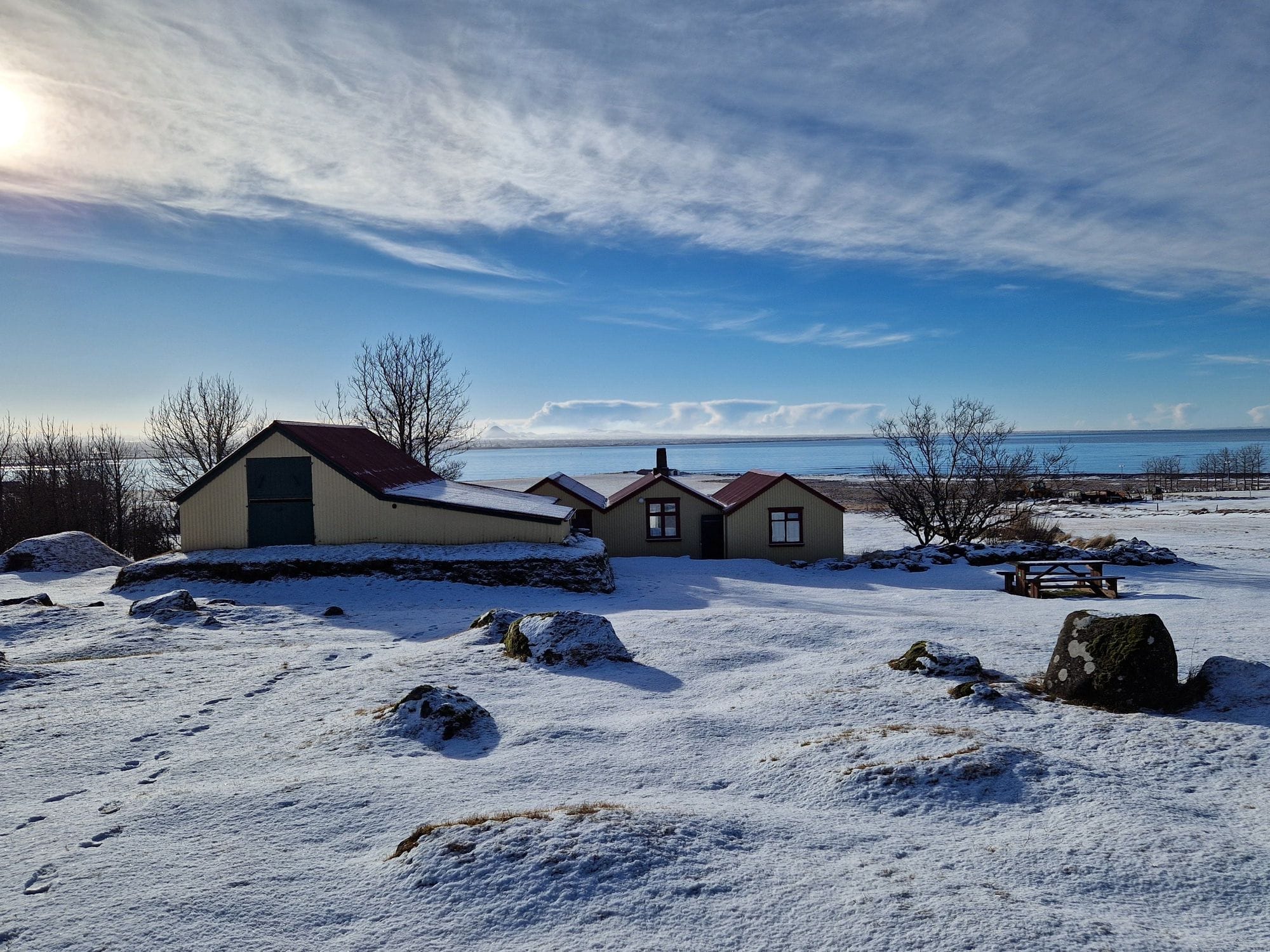
Krókur was inhabited until 1985. The descendants of the inhabitants of Krókur, Þorbjörg Stefaníu Guðjónsdóttir and Vilmundur Gíslason, donated the farm houses in Krókur, along with their furnishings, to Garðabær in 1998. The farm is a good example of the housing options and lifestyle of ordinary people in this part of the country in the first half of the 20th century.
During the summer, from June to the end of August, Krókur is open to the public on Sundays, from 11:30-14:30. Admission is free. Groups wishing to visit Krókur can contact Garðabær's cultural representative, Ólöfa Breiðfjörður, at olof@gardabaer.is
Workshop for academics and authors
In Krókur there is one room that is suitable as a workspace for scholars and writers. In other rooms of the building old artifacts are preserved. Scholars can apply for allocated workspace in Krókur through the Garðabær Service Portal. See the rules for allocating workspace below.
Rules for the allocation of work facilities in Krókur
The scholar/writer has use of office furniture, internet access, and the most necessary tableware. The agreement for use of Krókur stipulates access, insurance, etc.
The scholar/writer's use of the premises shall be free of charge, other than the requirement to pay for computer use and telephone.
As a general rule, the scholar/writer in question must, during their stay in Krókur, present their work in some way.
The work space shall be allocated for 3-12 months at a time. The Education and Culture Department shall annually advertise for applications from scholars/writers for temporary work space in Krókur. Applications shall be submitted to the Culture and Museums Committee, which shall make proposals to the municipal council on the allocation of the work space at each time.
A cultural representative shall handle agreements regarding the use of the premises and be Garðabær's point of contact with the artist in question during the period of residence.
Hofsstaðir Memorial Park
Hofsstaðir Memorial Park
At Hofsstaðir near Kirkjulund is a memorial park built around the archaeological remains of a settlement hut. The settlement hut is one of the largest huts that have been found in Iceland.
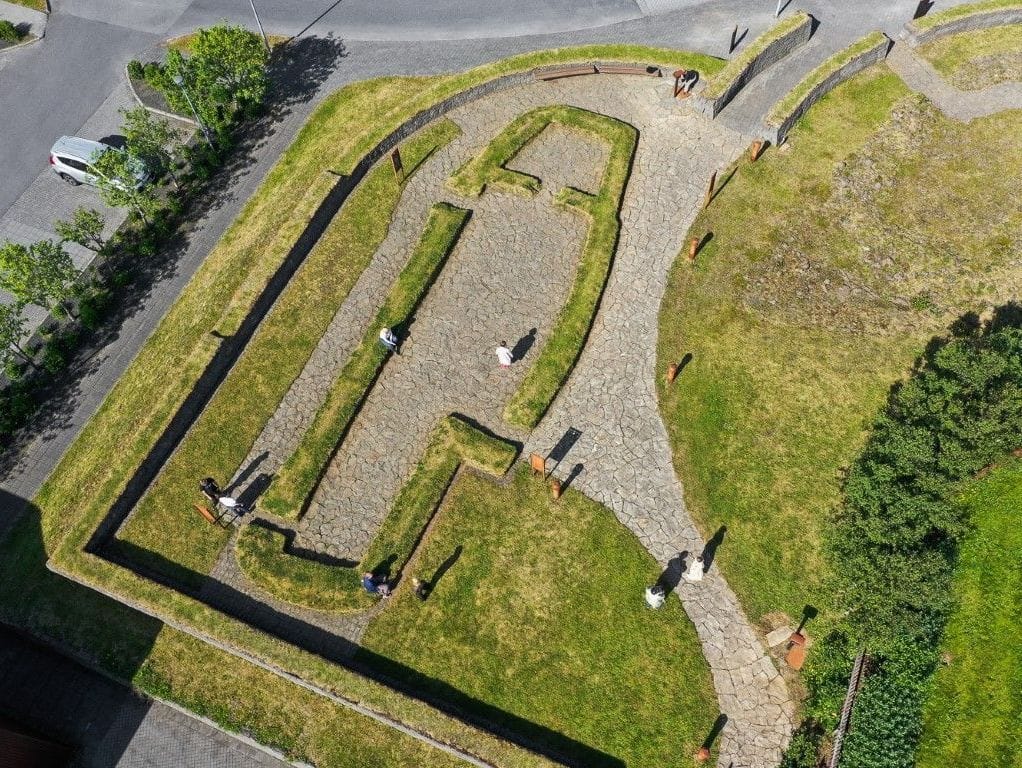
When construction began on the Kirkjuból preschool at Kirkjulund in 1985, significant artifacts were uncovered that indicated that the area had been inhabited in the 10th or 11th century. In 1994, the National Museum of Iceland began comprehensive archaeological research in the area at the request of the Garðabær municipality. Among the artifacts discovered were turf walls and a pit containing ash from the settlement period. The results of the archaeological research shed important light on the life and existence of people during the settlement period.
The Hofsstaðir Historical Park was built with the aim of preserving these important ancient monuments in an attractive and accessible way for visitors. The Historical Park has educational signs and multimedia telescopes that give visitors the opportunity to peer into the past in an entertaining way. At Garðatorg 7, you can learn even more about life in Garðabær from settlement to the present day in the exhibition Back to Hofsstaðir
The Hofsstaðir hut was about 170 square meters. The walls were made of turf and stone, slabs were laid in the lobby and a walkway in front of the hut. A clay floor and a hearth were left in the middle of the hut. The timbers were made of wood and it is not unlikely that there was a sleeping loft. The hut was probably paneled with wood on the inside and it is clear that it was a large farm.
It is not known for sure who built the hut or who lived there, but based on the size of the hut, it can be assumed that 20-30 people lived there, including slaves and workers.