Archaeological remains at Hofsstaðir and Urriðakot
Two main areas where archaeological remains have been studied in Garðabær are Hofsstaðir near Kirkjulund and Urriðakot south of Urriðaholt. There, rich relics have been found that show how people lived and prospered in ancient times.
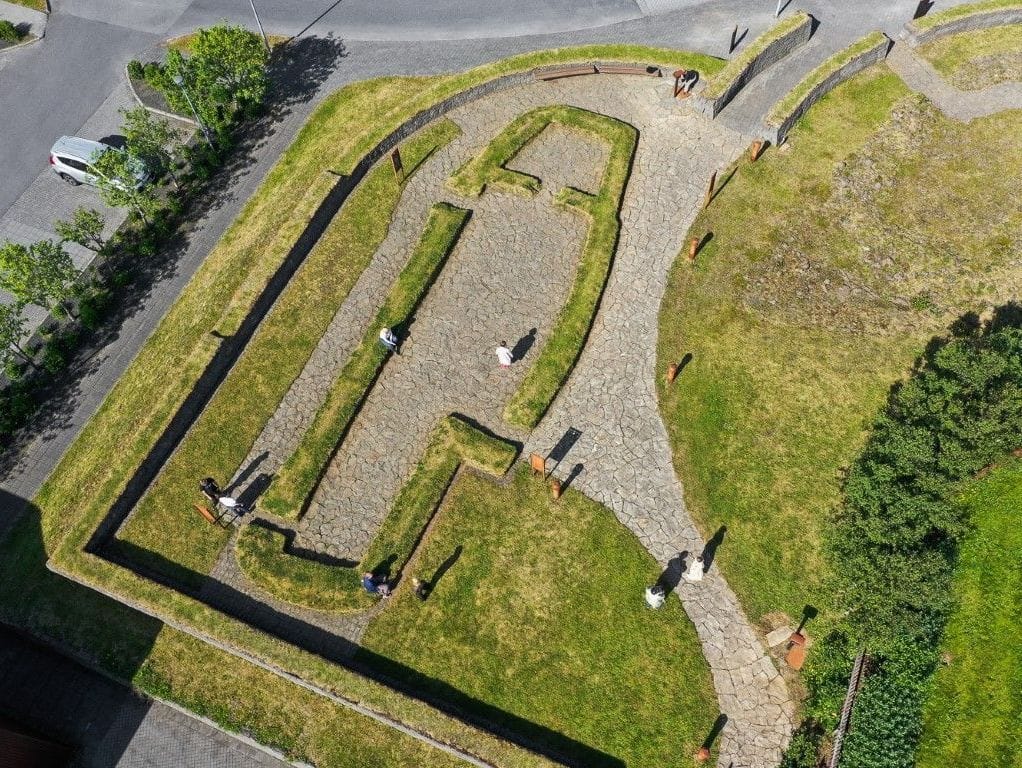
Temple sites at Kirkjulund
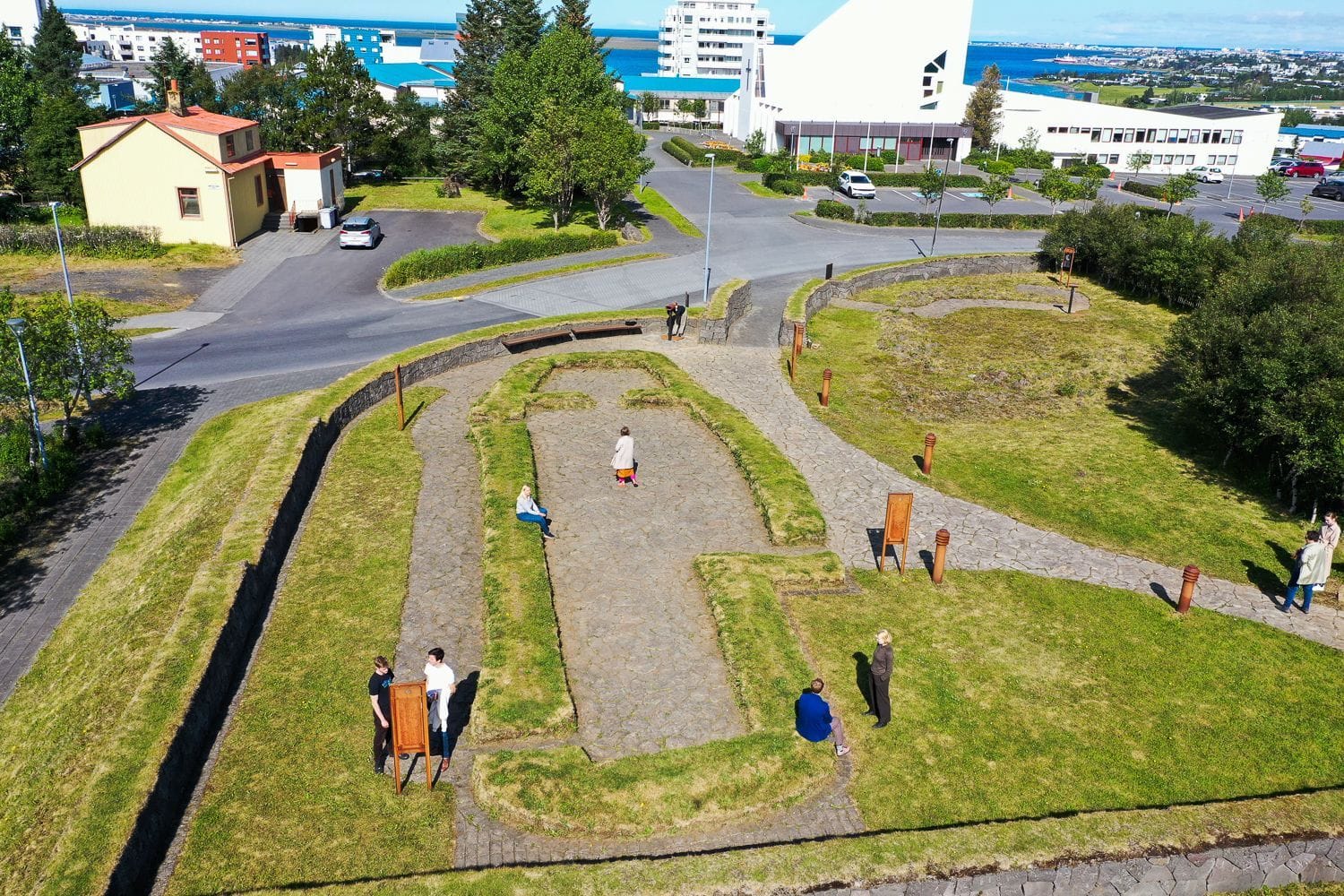
At Hofsstaðir you will find one of the largest Viking Age huts ever found in Iceland. The area is memorial park where you can explore the ruins of the hut and the history of the place.
Hofsstaðarskáli is about 30 meters long and 8 meters wide on the outside, but its floor area is about 170 square meters. The walls were built of turf and stone, slabs were laid in the lobby and a walkway in front of the hut. The timbering was made of wood and it is not unlikely that there was a sleeping loft. The hut was probably paneled with wood on the inside, and it is clear that it was a large farm.
A clay floor and a long hearth (a long open hearth) remained in the middle of the hut. The fire was used to cook food, heat the house and illuminate the space. Boiling holes, holes in the ground used to cook food with hot stones, were also found near the hut. A large amount of animal bones were found in the boiling holes, indicating that pigs, cattle and sheep were farmed. A bronze pin from the 10th century was also found at Hofsstaðir.
Residents
It is not known for certain who built the hut or who laid the foundation there, although there is some information about the inhabitants of Reykjanes. Based on the size of the hut, it is estimated that 20 to 30 people lived there, including slaves and laborers. Hofsstaðir is within the land that Ingólfur Arnarson, the first settler, claimed for himself and only 2 km from Vífilsstaðir where Vífill, Ingólfur's freedman, lived.
Back to Hofsstadir
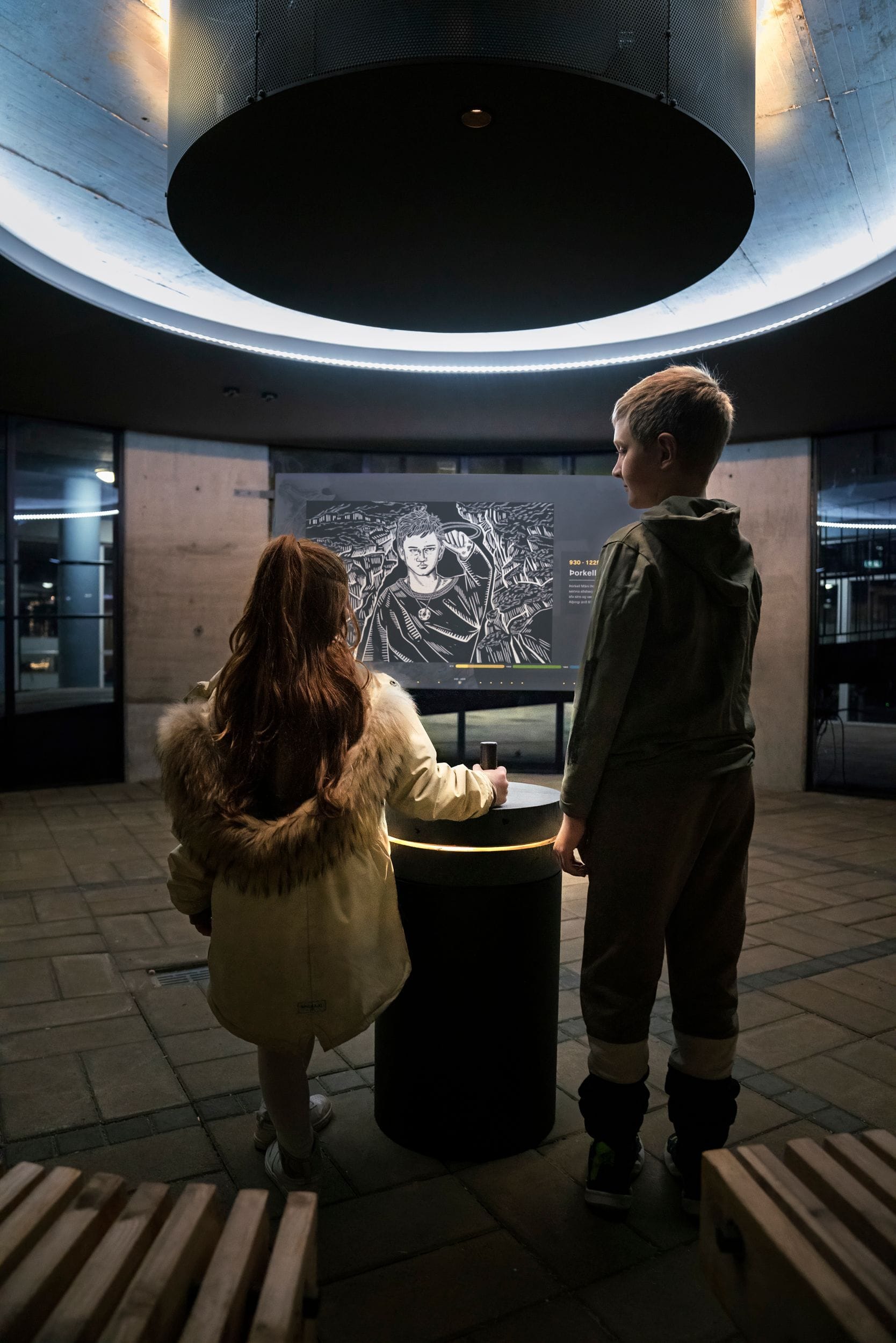
The multimedia exhibition Back to Hofsstaðir is in a pleasant space at Garðatorg 7. The exhibition spans the history of Garðabær from settlement to the present day. It is based, among other things, on the results of archaeological research on the settlement hut found at Hofsstaðir.
The exhibition was designed by Gagarin and is intended for school groups as well as individuals and families.
Urrðakot at Urrðakotsvatn
Urriðakot was a summer farm, where people stayed with their livestock during the summer. Remarkable relics have been found there from the time of settlement until the 15th century.
Remains of a hut, a barn, and a house for milk processing and cheese making, as well as a well, have been found. There are also younger seals from the 13th to 15th centuries with residential buildings, a bathhouse, a pantry, and a kitchen.
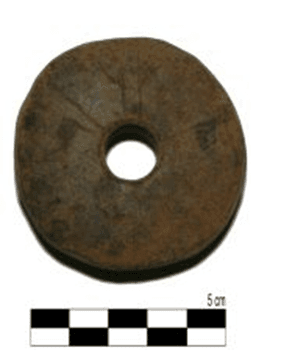
During excavations at Urriðakot, various artifacts have been found, including beads, an imported whetstone, a baking sheet, a silver ring, and a spindle whorl with runic inscriptions from the 13th century.